
Introduction:
Choosing privacy does not have to mean giving up daylight. Smart glass, also called switchable glass or PDLC (Polymer Dispersed Liquid Crystal) glass, gives architects and interior designers another way to balance the two. For Austin homeowners and businesses, a common question is whether it still lets natural light through. Here is how the technology handles light and visibility.
How Smart Glass Switches:
PDLC smart glass uses Polymer Dispersed Liquid Crystals to change its appearance. An applied electric current aligns the crystals, allowing a transparent view. Without that current, they scatter light to create an opaque, frosted appearance. This electrical switching makes privacy available without a conventional window covering.
A Choice Between Views and Privacy:
Switchable glass lets a room feel open when visibility is welcome and private when it is not. A Downtown Austin meeting room, for example, can shift from a transparent enclosure to a screened space for a discussion. The same glass serves both needs, with no permanent visual barrier.
Daylight in Either State:
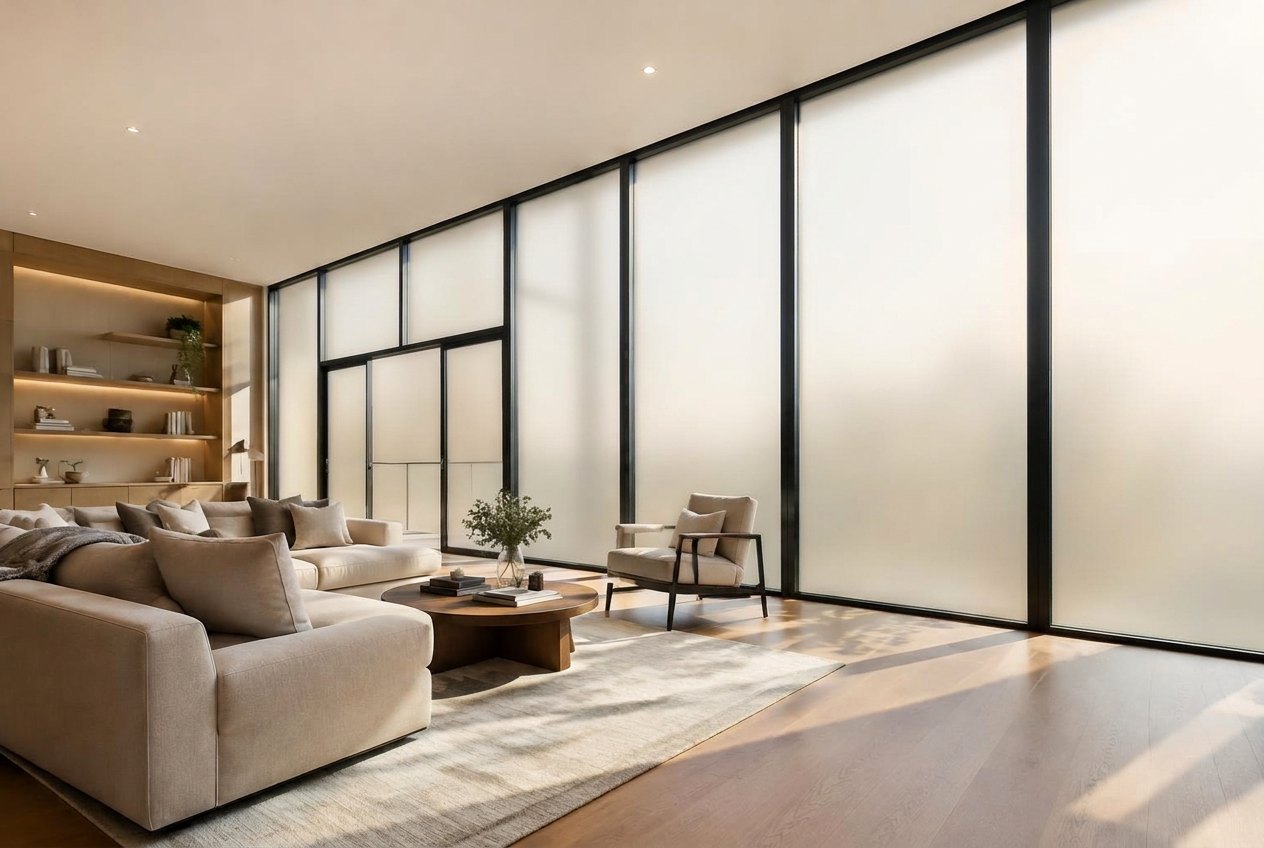
Smart glass allows daylight to enter rather than simply blocking it out. In its frosted state, PDLC scatters incoming light while obscuring the view, so privacy does not require a dark room. Access to natural light is associated with better mood, energy levels, and satisfaction, supporting comfortable spaces for living and working.
Adjusting the Light Experience:
Changing the glass from clear to frosted changes how light moves through a space. Users can choose an open view or a more diffuse light experience to suit the activity. Where compatible controls allow additional adjustment, light transmission can be tailored further. The available range depends on the selected glass and control system.
Supporting Daylight-Conscious Design:
Making useful daylight part of a design can reduce the need for artificial lighting and help lower lighting energy consumption. Smart glass supports that approach by keeping natural light available when privacy is needed. For Austin projects, it is one element of an energy-conscious design rather than a substitute for planning around intense Texas sun.
Where Smart Glass Fits:
In a Lakeway home, smart glass can provide privacy while preserving a bright interior. In a tech office, it can make meeting spaces adaptable throughout the workday. Hotels, medical clinics, and other commercial settings can also use switchable glazing to balance visibility, daylight, and the changing needs of occupants.
What Affects Light Transmission:
The amount and character of light passing through smart glass depend on glass tint, control settings, and conditions outside. In Greater Austin, window orientation and strong west-facing sun are useful considerations when planning a space. Understanding these variables helps users choose settings and glazing that suit their daylight goals.
How the Technology Is Evolving:
Smart glazing continues to develop, opening up more ways to manage light in buildings. Electrochromic glass, a different technology from PDLC, offers another approach to controlling light transmission. Continued advances may broaden the choices available to designers and expand where smart glass can be used.
Conclusion:
Yes, smart glass lets natural light in while offering on-demand privacy. PDLC changes between a transparent view and a frosted appearance that diffuses light, giving Austin homes and workplaces flexibility without necessarily sacrificing brightness. Thoughtful daylight use can support well-being and productivity while reducing reliance on electric lighting. As smart glazing evolves, it will offer more opportunities to shape how people experience light indoors.