
A New Approach to Privacy
Choosing privacy for an Austin home or office no longer has to mean adding another window covering. PDLC smart glass offers an alternative to traditional blinds, combining simple controls with a clean appearance and potential energy-saving benefits. It lets you create privacy while still admitting natural light, then restore a clear view when privacy is no longer needed. For spaces where flexibility matters, that balance makes smart glass a compelling choice.
Why PDLC Smart Glass Stands Out for On-Demand Privacy
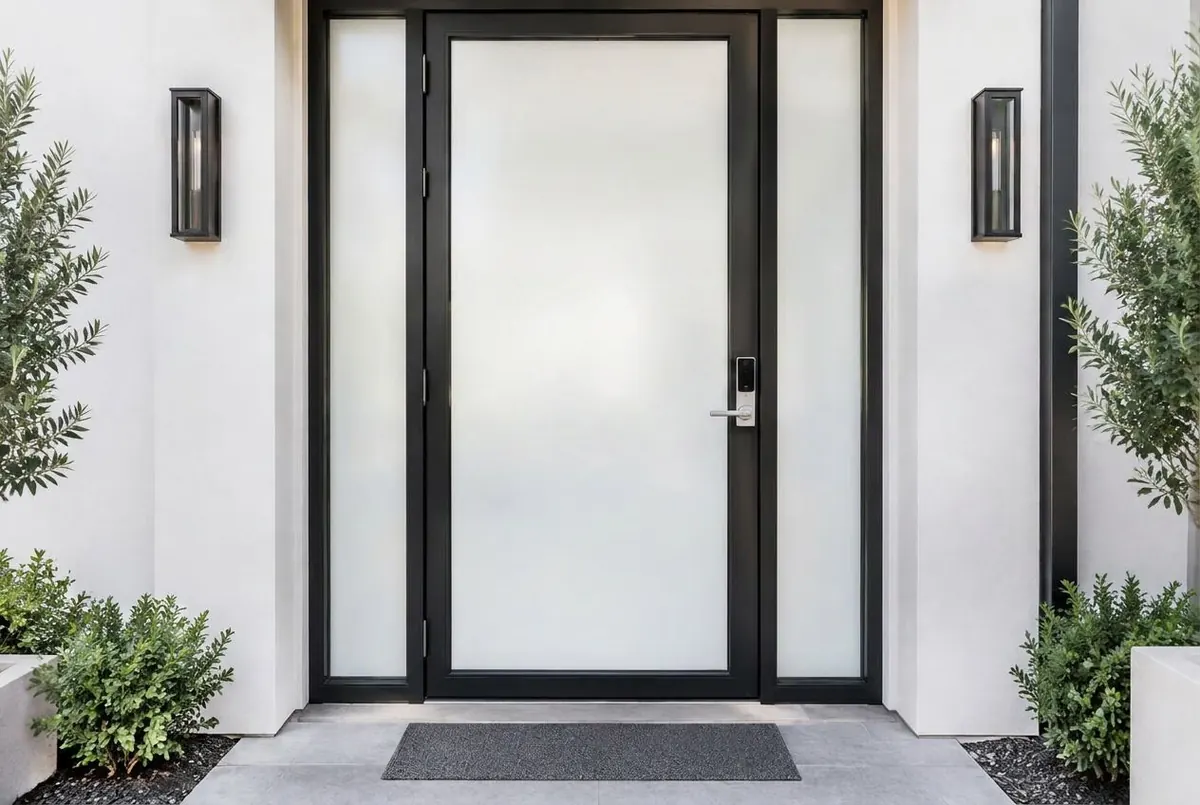
The same advantages extend to hospitality, where guests expect privacy without complicated controls. Switchable glass with PDLC film changes from transparent to opaque at the press of a button or flick of a switch. In a Downtown Austin hotel suite, for example, a glass bathroom or bedroom partition can provide an open feel on arrival and privacy whenever a guest wants it. Inside the film, liquid crystal molecules change their alignment when an electric current is applied, altering how light passes through the glass. The result is a quick transition that makes privacy easy to manage.
Guest comfort is another consideration, particularly under the intense Texas sun. Smart glass can block up to 99% of UV rays and can help manage glare and solar heat, depending on the glazing assembly. In rooms with west-facing exposure, those factors deserve attention alongside privacy. PDLC glass can also be incorporated into acoustically designed partitions to help limit noise between spaces. Sound isolation depends on the complete wall and glazing construction, rather than the privacy film alone—an important distinction for busy lobbies and restaurants.
Privacy Controls That Fit the Design
Switchable glass gives hospitality designers room to work across contemporary and traditional interiors. Windows, doors, partitions, and skylights can all become opportunities to balance openness with privacy. A South Congress boutique hotel, for instance, could incorporate smart glass into its visual theme without relying on bulky window treatments. Custom design options can help the glass feel like part of the property's identity rather than an accessory added later.
Wood, metal, and stone also pair naturally with smart glass. A bar counter with a switchable glass front could conceal its bottle and glassware display, then reveal it as the room shifts into evening service. In a restaurant or lounge, that change becomes a focal point while keeping the surrounding design uncluttered. Integrating privacy into the glass itself offers a polished alternative to adding curtains or blinds around every opening.
Where Traditional Blinds Fall Short
Blinds provide familiar privacy, but they do not offer the same opportunities to reveal or conceal architectural features. At a Hill Country resort, switchable glass could hide a private spa or wine cellar until staff reveal it with a switch, adding a memorable moment to the guest experience. When combined with compatible display and touch-control systems, smart glass can also support interactive features such as guest information, lighting and temperature controls, or changing digital window imagery. These functions require the supporting technology; PDLC film alone does not create a touchscreen or alter the outdoor view.
Hospitality properties can also combine smart glass with suitable projection or display equipment for branding, promotional messages, and digital signage. Meeting and event spaces offer another practical application: glass partitions can turn opaque during private discussions or presentations, then return to transparent during breaks. For an Austin venue hosting both business gatherings and social events, this ability to change the room's atmosphere adds flexibility that conventional blinds cannot match as seamlessly.
The Broader Benefits of PDLC Smart Glass
Sustainability is another reason hospitality operators consider switchable glass. Replacing curtains or blinds can reduce the need for separate covering materials and the waste associated with replacing them. Depending on the glass specification and overall building design, solar heat control can also help reduce HVAC demand and energy use. For Greater Austin properties facing strong summer sun, evaluating smart glass as part of the complete glazing system can identify opportunities for lower energy costs and a smaller operational carbon footprint, alongside its everyday privacy benefits.