
Introduction:
From a boutique hotel on South Congress to a retreat overlooking Lake Travis, hospitality spaces need to feel welcoming while adapting to different guest needs. Smart glass, also called switchable glass or privacy glass, helps designers balance openness with discretion. Using PDLC (Polymer Dispersed Liquid Crystal) film, it changes the visibility through glass on demand. Hotels, resorts, restaurants, and spas can use this technology to make privacy controls part of the architecture rather than an afterthought.
Guest Privacy Without Sacrificing Openness
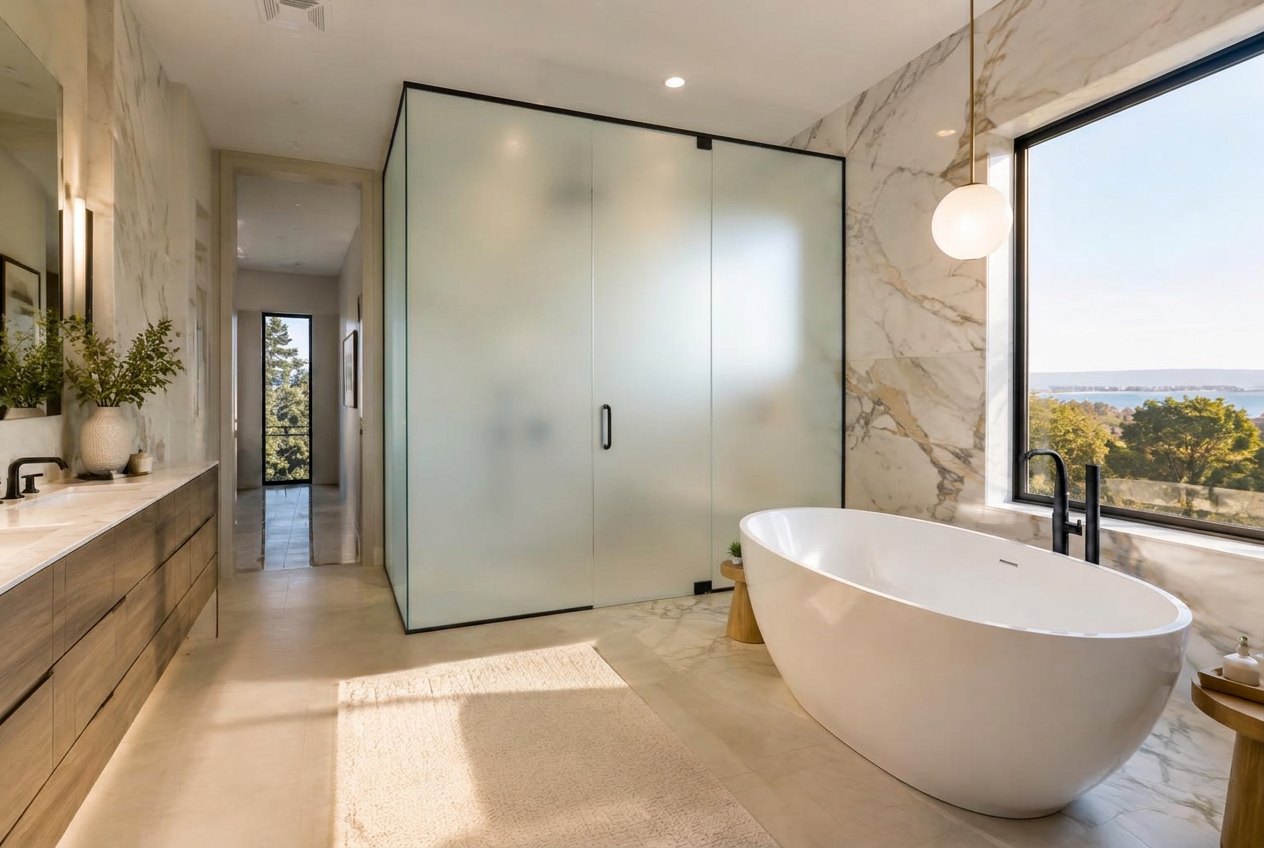
Guests should be able to choose when a room feels open and when it feels private. Switchable privacy glass makes that choice as simple as pressing a button or flipping a switch. In a hotel suite, a transparent bathroom or bedroom partition can turn opaque when privacy is needed, then return to clear glass afterward. Inside the PDLC film, liquid crystal molecules change their alignment in response to an applied electric current, altering how light passes through. The quick transition gives guests straightforward control without handling curtains or adjusting blinds.
Comfort matters just as much as privacy, especially where intense Texas sun reaches guest rooms and lounges. Smart glass can block up to 99% of UV rays and help manage glare; its contribution to solar heat control depends on the complete glazing system. For busy lobbies and restaurants, PDLC glass can also be incorporated into acoustically designed partitions. Sound isolation comes from the wall and glazing assembly, rather than from the privacy film alone.
Flexible Design with a Refined Finish
Switchable glass gives hospitality designers a material that can change function without changing the room's physical layout. It works across contemporary and traditional interiors and can be incorporated into windows, doors, partitions, and skylights. Customization can connect the glass to a property's visual identity, helping an Austin hotel or spa carry a consistent design language throughout the guest experience.
Pairing smart glass with wood, metal, or stone adds another layer of visual interest. A bar counter, for example, could change from opaque to clear to reveal the bottles and glassware behind it. In a Downtown Austin lounge, that transition could become a distinctive focal point while complementing the surrounding finishes. Thoughtful integration keeps the technology from feeling like an add-on and gives the space a polished, contemporary character.
Memorable Moments and Adaptable Spaces
A change in transparency can become part of the experience itself. At a luxury hotel or Hill Country resort, switchable glass could conceal a private spa area or wine cellar until staff reveal it with a switch. Paired with compatible display and touchscreen systems, it can also support interactive guest services, such as access to property information or controls for lighting and temperature. Digital imagery can change what guests see on an integrated display, while the PDLC glass itself controls privacy rather than altering the actual outdoor view.
Hospitality operators can also combine smart glass with compatible projection or display equipment for branding, event messaging, and promotional content. Meeting rooms and event spaces benefit from a simpler everyday use: glass walls can become opaque during private discussions or presentations, then return to transparent during breaks. That flexibility lets one room support focused business gatherings and a more open social atmosphere without moving partitions.
Considering Sustainability and Energy Use
For hospitality properties working toward more sustainable operations, smart glass offers an alternative to curtains and blinds, reducing the materials associated with those window treatments and their replacement. Solar performance is another consideration in Greater Austin, particularly for west-facing rooms exposed to strong afternoon sun. When specified as part of an appropriate glazing system, smart glass can help limit solar heat gain and UV exposure, potentially easing HVAC demand and lowering energy costs and the property's carbon footprint. Cooling and heating benefits depend on the full window assembly, building design, and operating conditions—not simply on whether the privacy glass is clear or opaque.