
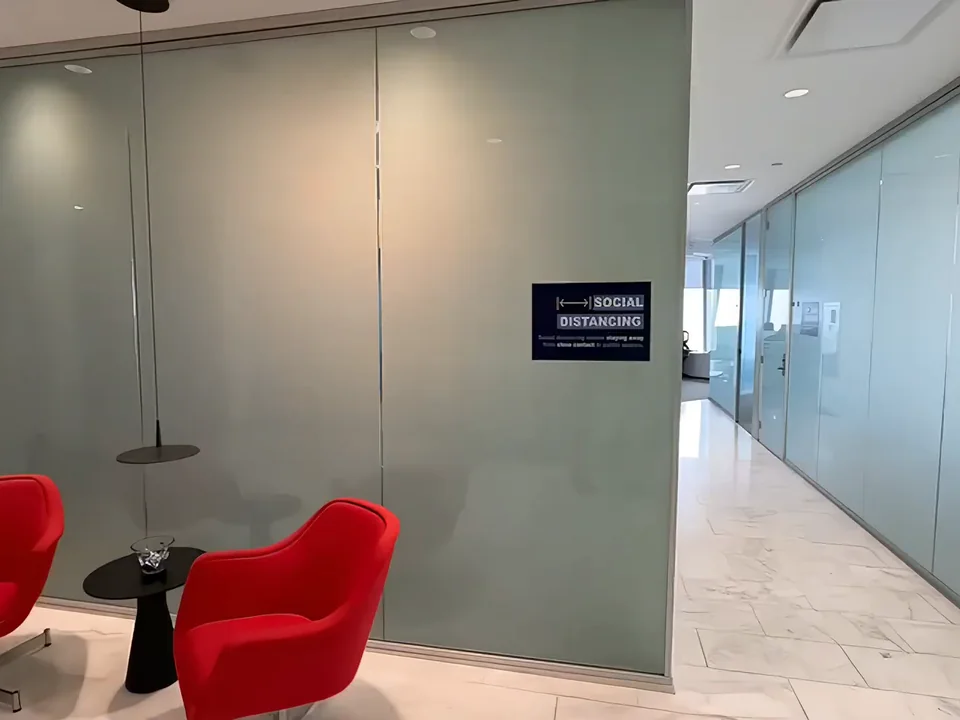
A commercial space should reflect how your company works, not limit it. Smart glass, also called switchable glass or dynamic glass, changes from clear to opaque with a switch. For Austin businesses, that means a single glass surface can support an open, welcoming layout one moment and visual privacy the next—giving the workplace a distinctive look with practical flexibility.
Office privacy when you need it
Daylight makes an office feel inviting, but managing it matters—especially around west-facing meeting rooms in Austin. Blinds and curtains can leave a room feeling closed off when drawn. Switchable privacy glass diffuses incoming light in its opaque state, preserving a bright atmosphere while screening views. It can help address visual comfort, though glare control depends on the glazing and the room’s exposure.
Light diffusion is only part of the appeal. Switching the glass to opaque obscures direct views, helping teams hold private meetings without permanently closing off the office. A busy startup near The Domain, for example, can keep its meeting rooms visually connected between conversations and screen them when privacy matters. Lighting and proximity to the glass can affect whether silhouettes remain visible.
Smart glass can also play a role in a building’s energy strategy. With intense Texas sun putting cooling systems to work, the performance of exterior glazing deserves attention. Depending on the complete glazing assembly, managing incoming solar heat may help lower cooling demand and energy costs. Switching privacy glass to opaque alone, however, does not guarantee heat rejection or savings.
- Give conference rooms and meeting spaces a contemporary finish with switchable glass that adapts to presentations, discussions and private conversations.
- Divide workspaces with smart glass partitions to add visual privacy while allowing diffused daylight to pass through.
- When replacing exterior windows, evaluate smart glass as part of an energy-efficient glazing system suited to your workplace.
Thoughtfully placed smart glass can make your commercial space both recognizable and easier to use. From a Downtown Austin office to a growing team in Round Rock, the strongest applications pair a clear design goal with everyday needs. Whether the priority is a more flexible layout or better-performing exterior glazing, choosing the right installation matters.
The potential environmental benefits follow the same principle: consider the whole system. Where an appropriate glazing assembly reduces heating or cooling demand, lower electricity use can also help reduce a company’s operational carbon footprint. Those results depend on the building, its exposure and the glass specifications—not simply on its ability to switch between clear and opaque.
Cleaning is another practical consideration. Curtains and blinds can collect dust and allergens in fabric folds, slats and hardware. A smooth glass surface is easier to wipe down and removes the need for those dust-collecting coverings where they would otherwise be used. That can support routine cleaning in offices and medical clinics, although smart glass itself does not filter or purify indoor air.
Material lifespan also belongs in the sustainability discussion. Some conventional window coverings use synthetic materials that can take hundreds of years to decompose. Durable smart glass may reduce the need to replace coverings over time. At the end of its service life, recycling options should be checked with the manufacturer and local facilities, since laminated glass and electrical components require appropriate handling.
Acoustics are worth considering alongside privacy. Open-plan offices and high-ceilinged spaces can allow conversations and other sounds to carry. A properly specified glass partition can help limit sound transmission, making adjacent areas more comfortable for focused work. Acoustic performance comes from the glass construction, seals and overall room design; the switchable layer alone does not provide soundproofing or control echo.
For businesses across Greater Austin, smart glass offers a practical way to combine contemporary design with on-demand visual privacy. It can support brighter-feeling meeting spaces, more adaptable layouts and broader building-performance goals when specified appropriately. Start with the needs of your team and your space, and smart glass can become a useful feature that helps your company stand apart.