Understanding the Difference Between Smart Glass and Smart Film
Planning a private meeting room in Downtown Austin or updating a bathroom in a Lakeway home? Smart glass and smart film both let you change glass from clear to opaque on demand, but they are different products. Understanding their construction, installation needs, and everyday operation can help you choose the right approach for your space.
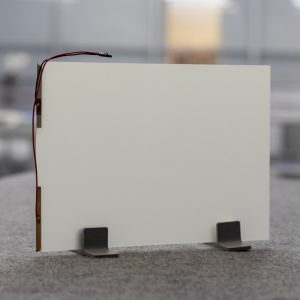
Composition Smart glass, sometimes called switchable privacy glass, incorporates a liquid-crystal layer between layers of glass. A switch or remote lets you change its appearance from transparent to opaque and back again. Smart film delivers the switchable layer as a thin, flexible polymer film that can be applied to existing glass. Electrical connections link that film to a power source. For these PDLC products, applying power aligns the liquid crystals and makes the panel transparent; switching power off returns it to its opaque privacy state. The main distinction is whether the technology is built into the glass or added to its surface.
How they work Both products use PDLC (Polymer Dispersed Liquid Crystal) technology. Liquid crystals suspended within a polymer layer respond to an electrical voltage. With power on, the crystals align so light passes through with a clear view. With power off, they return to a disordered arrangement that scatters light, obscuring the view through the glass. This opaque state provides visual privacy rather than turning the window into a blackout panel. Whether installed as smart glass or retrofit film, the technology allows a room to shift between openness and privacy as needed.
Advantages Both options offer convenient privacy control without relying on blinds or curtains. Smart glass integrates the switchable layer into the glazing, making it a useful choice when new glass is already part of a construction or renovation plan. Available framing and finish options can help it fit the surrounding design. In an Austin tech office, for example, a meeting room can stay visually open between confidential discussions. Smart film is generally the more cost-effective, simpler installation route when suitable glass is already in place. That makes it worth considering for existing office partitions, medical clinics, and residential windows. Privacy performance depends on the product and viewing conditions, rather than film automatically providing more privacy than smart glass. Both require electrical connections to switch to their clear state, although their opaque state does not require power.
Conclusion Switchable privacy technology gives Austin homeowners and businesses another way to balance open views with privacy. Smart glass incorporates PDLC technology into the glass assembly, while smart film adds it to existing glazing. Both can suit bedrooms, bathrooms, home offices, and shared workspaces where on-demand visual privacy matters. For windows exposed to intense Texas sun or west-facing glare, evaluate the specific product’s light and energy performance separately from its privacy function. The best choice comes down to whether you are replacing glass or keeping it, along with your installation requirements, budget, and design goals.